
In the wake of growing environmental consciousness and a global commitment to sustainable practices, Australia is witnessing a monumental shift in its energy dynamics. With wind, solar, hydro, and battery technologies among the contenders vying for dominance in Australia's National Electricity Market (NEM), solar power appears to be emerging as the key player.
On the 8th of November, ACLE's Co-Founder Brenton Moratto took to LinkedIn to post a poll question on whether solar power would take the lead as the primary source of renewable energy in Australia's NEM. The response was overwhelming, with nearly 80% of respondents voting yes with some saying that it's not just a possibility but an undeniable reality.
The numbers don’t lie
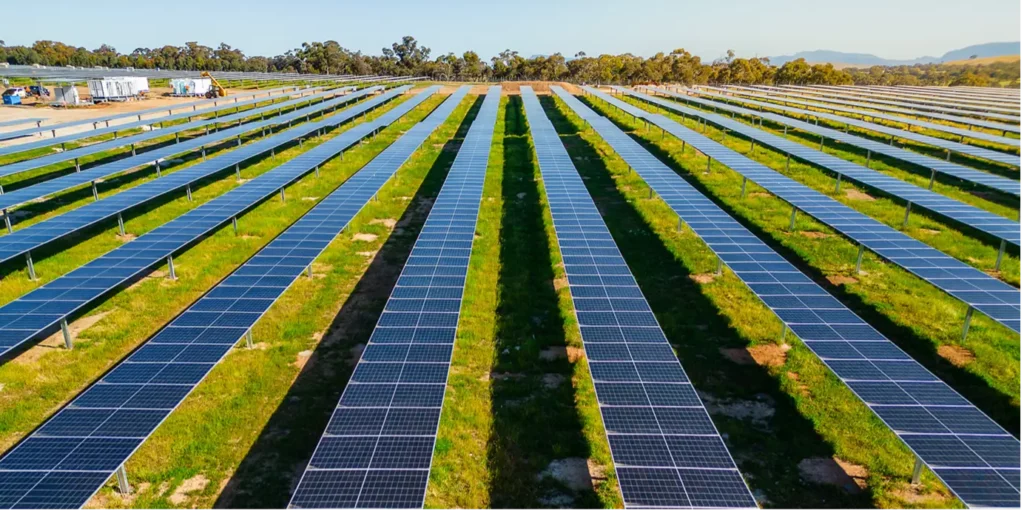
Remarkably, Queensland’s state grid had reached a new in solar output with a new benchmark of 71.2% set last Thursday [9th of November]. The record beat the previous peak of 69.6% with a combination of rooftop solar (approximately 3.6 GW) and utility-scale solar (2.5 GW), according to GPE NEMLog2.
And just recently, New South Wales hit a milestone with renewables reaching 82%, with solar and rooftop PV contributing 55.7% to the state's demand. Even in the largest coal fleet state, solar power is taking centre stage.
It is also worth pointing out that on Sunday [12th of November], the NSW coal fleet, with a capacity of 8.2 GW, plummeted to just 1.6 GW, with its share of generation dwindling to a mere 16% in the late morning. The shift is evident - not only is coal generation on the decline, but solar is stepping up to fill the gap.
On a national scale, the numbers speak volumes. Renewable energy accounted for a record 72.9% of Australia's total generation. The lion's share came from rooftop solar in households and businesses, making up around 44% of total generation, complemented by utility-scale solar contributing just over 14%.
AEMO’s Priority
In addition to the shift towards renewables, the Australian Energy Market Operator is actively tackling engineering challenges to ensure a seamless transition. They're addressing critical aspects like maintaining inertia and system strength to align with the ambitious infrastructure roadmap, aiming for 12GW of new wind, solar, and storage by 2030.
Government Intervention
The NSW Government is investing an additional $413 million into rural communities, to communities hosting clean energy infrastructure, solar included.
In particular, rural local governments will be paid $850 per megawatt of capacity per annum for 25 years to agree to host new solar farms. These payments are in addition to any lease agreements between developers and landowners, as well as compensation for potential damage to commercial operations or land value.
To accommodate the growth of large-scale solar generation, NSW is gearing up to build 4000 km of new transmission lines. This strategic move aims to boost hosting capacity in the state's proposed renewable energy zones and other suitable areas, elevating it from the current 16GW to a substantial 125GW.
What this means for the solar industry
ACLE applauds this move as we recognise the challenges faced by rural communities in supporting renewable energy infrastructure.
The allocation of additional funds to local governments is a commendable step, which will both encourage the growth of renewable energy projects in rural areas and reward communities for their pivotal role in Australia’s green transition.
Solar power goes beyond ensuring a stable energy supply; it is set to transform Australia's energy landscape, reducing reliance on aging coal plants and ushering in a new era of environmentally friendly and cost-effective energy.
There is a lot to look forward to when analysing the existing trends and newly announced policy reforms. Whilst the poll results from our Co-Founder Brenton’s post show that belief that solar power has the ability to transform Australia’s energy mix, more important is the steps being taken to make this prediction a reality.